
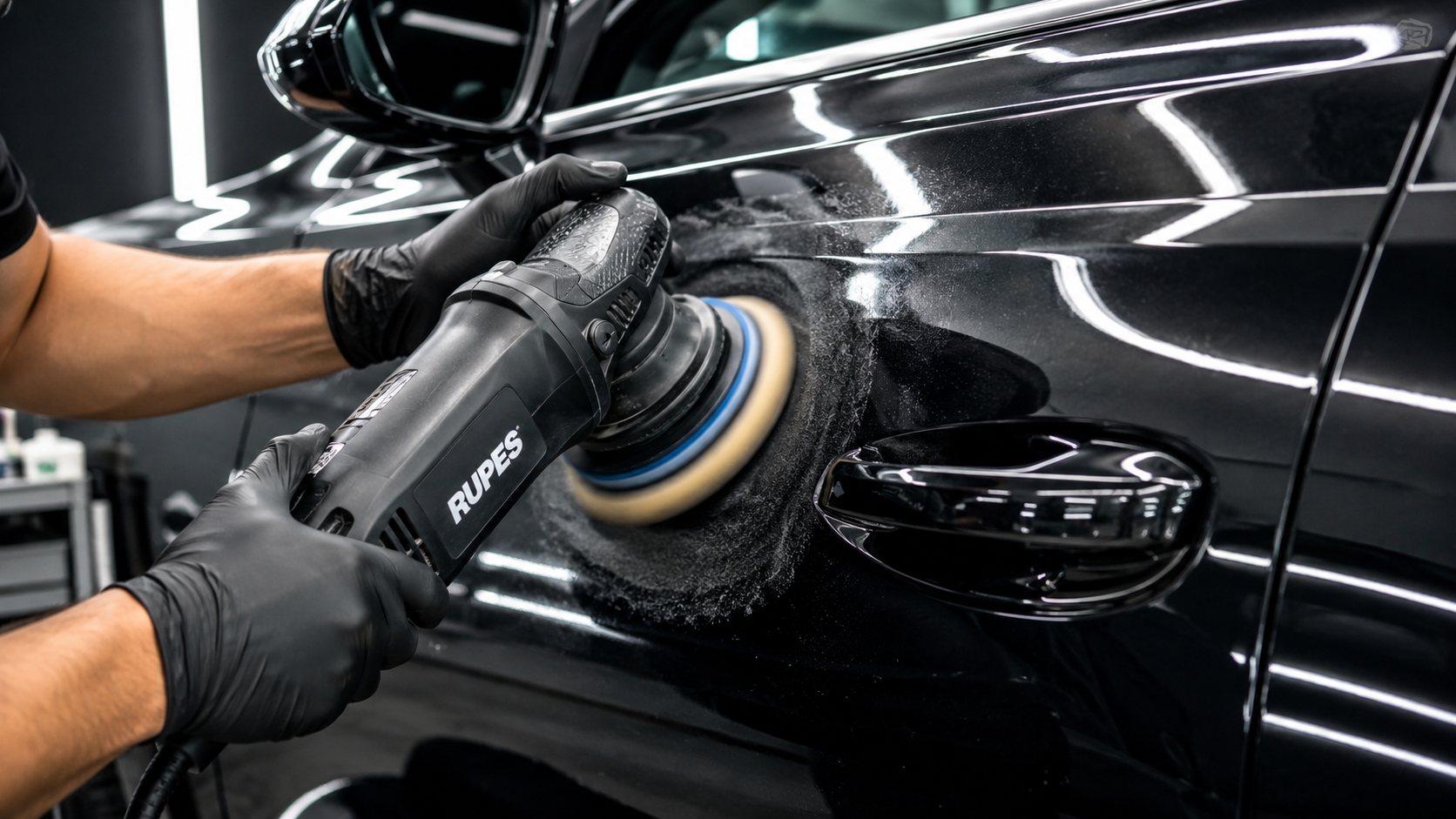
Paint correction is one of the most misunderstood services in the detailing world. The term gets used broadly, and not everyone offering it is performing the same level of work. If you’ve been quoted for paint correction, or noticed your car’s paint looking dull and scratched, here’s what you need to know.
What Paint Correction Actually Is
Paint correction is the process of removing surface defects from a car’s clear coat through machine polishing. The clear coat, the transparent protective layer over your car’s colour, is where swirl marks, light scratches, water spot etching, and oxidation live. Paint correction works by removing a very fine layer of clear coat to level the surface and eliminate those defects.
Think of it like sanding a wooden surface. You’re removing material to get below the scratches, leaving a smooth, defect free surface behind. The difference is that on a car, the amounts involved are microscopic, and the process requires specialist equipment and significant skill to do without causing further damage.
What Paint Correction Fixes
Swirl marks: the fine circular scratches visible in sunlight, typically caused by poor washing technique, automatic car washes, or dry wiping
Light scratches: surface scratches that haven’t penetrated through the clear coat
Water spot etching: mineral deposits that have chemically altered the clear coat surface
Oxidation: the dull, chalky appearance caused by UV breakdown of the clear coat
Buffer trails: marks left by previous poor machine polishing
Minor bird dropping or sap etching: where the contaminant has left a mark in the clear coat
What Paint Correction Cannot Fix
Deep scratches that have cut through the clear coat and into the colour coat: these require touch up paint or panel respray
Stone chips that have removed paint down to bare metal
Rust: paint correction is a surface process only
Dents and physical panel damage
A simple test for whether a scratch can be corrected: run your fingernail across it. If your nail catches in the scratch, it’s likely too deep for polishing alone. If it glides over it, it’s a surface defect in the clear coat that paint correction can address.
Levels of Paint Correction
Paint correction isn’t a single service. It’s a spectrum, and detailers typically offer different stages:
Single Stage Polish, Enhancement
A single pass with a light cutting compound or polish that removes minor defects and significantly improves gloss. Suitable for cars in good overall condition with light swirling and minor surface imperfections. The most accessible and affordable level of correction.
Two Stage Correction
A more aggressive cutting stage to remove deeper defects, followed by a refining stage to restore gloss and remove any marks left by the first stage. This is the most common professional paint correction service and addresses the majority of real world paint defects.
Multi Stage or Full Correction
Multiple stages of cutting, refining, and finishing, aimed at achieving the maximum possible defect removal, typically 90% or more of surface defects eliminated. Used for show preparation, prestige vehicles, or cars with significant accumulated damage. The most time intensive and expensive level.
How Long Does Paint Correction Take?
Depending on the vehicle size, paint condition, and level of correction, paint correction takes anywhere from 4 hours to a full day or more for intensive multi stage work. It cannot be rushed without compromising results. A detailer claiming to do a ‘full paint correction’ in under two hours on a full size vehicle should be questioned.
What Happens After Paint Correction?
After paint correction, the paint surface is at its most vulnerable. The protective layers have been worked through and the clear coat is freshly levelled. A paint protection product should always be applied after correction to seal and protect the work.
This is the ideal time to apply a ceramic coating. The corrected, clean surface allows the coating to bond optimally, and the hydrophobic protection it provides helps maintain the correction results for longer.
Does Your Car Need Paint Correction?
Check your car in direct sunlight or under a strong light source at a low angle. If you can see a network of fine swirling scratches, hazy patches, or a dullness that doesn’t improve after washing, your car would benefit from paint correction.
The practical test: does your car look significantly better when wet than when dry? Water temporarily fills surface imperfections and acts like a thin layer of polish. If your car looks great wet and flat or swirly when dry, paint correction is likely to make a meaningful difference.
If you’re looking for a qualified detailer to assess and correct your paint, CarConex connects you with trusted local professionals. Post your request through the app to compare options and get a proper assessment.