
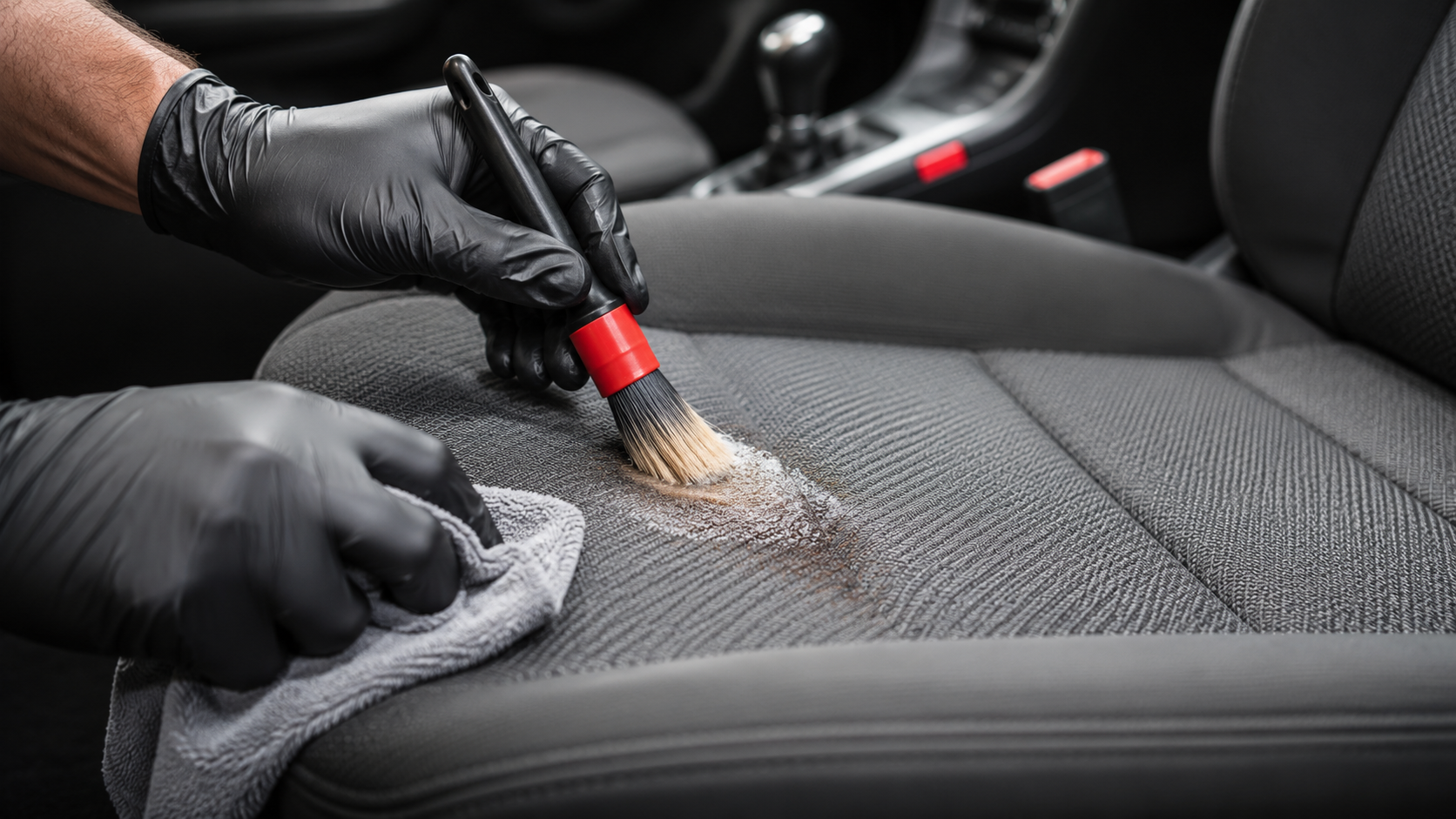
Fabric car seats are magnets for stains, coffee, sauce, mud, ink, blood, grease, and the general accumulation of daily life. Some stains come out easily with a quick wipe. Others set into the fabric and seem to resist everything you try.
The key to successful stain removal is understanding what you’re dealing with and using the right approach. Here’s how to tackle the most common fabric seat stains, including the ones that seem permanent.
Before You Start: Important Rules
Act fast: fresh stains are almost always easier to remove than dried, set stains. The quicker you treat a spill, the better your chances of full removal.
Blot, don’t rub: rubbing a stain spreads it and drives it deeper into the fabric fibre. Always blot with a clean cloth, working from the outside of the stain inward.
Test first: before applying any product to a visible area, test it on a hidden spot, under the seat or in the boot, to check for colour fastness and fabric reaction.
Don’t over wet: saturating fabric can push the stain deeper and cause moisture to soak into the seat foam beneath, leading to mildew and odour. Use products sparingly and extract as you go.
What You’ll Need
Clean white microfibre cloths, multiple
A dedicated upholstery cleaner or fabric stain remover
A soft bristle brush, an old toothbrush works for small areas
A wet dry vacuum or carpet extractor for pulling liquid out
Warm water
White vinegar and bicarbonate of soda, for home remedies where appropriate
Stain Specific Removal Methods
Coffee and Tea
Blot up as much liquid as possible immediately. Mix a solution of one part white vinegar to two parts warm water and apply to the stain with a cloth. Work from the outside in, blotting repeatedly with a clean section of cloth. For set stains, a dedicated upholstery cleaner applied and agitated with a soft brush before blotting is more effective. Rinse with clean water and blot dry.
Mud and Dirt
Counter intuitively, let mud dry completely before attempting to remove it. Trying to clean wet mud spreads it further into the fabric. Once dry, vacuum up as much as possible first, then treat the remaining stain with an upholstery cleaner and a soft brush. Blot clean and repeat as needed.
Grease and Oil
Apply a small amount of dishwashing liquid directly to the stain. This is one of the few appropriate uses of dishwashing liquid in car care. Work it gently into the fabric with a soft brush, then blot with a clean damp cloth. Rinse and repeat. For heavier grease stains, a dry cleaning solvent or dedicated degreaser formulated for fabric is more effective.
Blood
Use cold water only, never hot, as heat sets blood proteins into fabric permanently. Apply cold water and blot repeatedly. For fresh blood, hydrogen peroxide, 3% solution, the type from a pharmacy, applied carefully can be very effective. Apply, allow to bubble for 30 seconds, then blot clean. Test on a hidden area first as it can affect some fabric dyes.
Ink
Ink is one of the more challenging stains. Isopropyl alcohol, rubbing alcohol, applied to a cloth and blotted onto the stain, never rubbed, can lift ink from fabric. Work carefully and change to a clean section of cloth frequently to avoid spreading. Hairspray, alcohol based, is an old remedy that works on some inks. For ballpoint pen on fabric, dedicated ink removers are more reliable.
Food and Sauce
Remove any solid material first with a spoon or blunt knife. Don’t smear it further. Apply an upholstery cleaner or a mixture of warm water and a small amount of dishwashing liquid, work in gently with a brush, and blot clean. For tomato based stains, white vinegar helps neutralise the pigment before cleaning.
Vomit
Remove solids carefully first. Apply a baking soda paste, baking soda mixed with a small amount of water, to absorb moisture and neutralise odour. Allow to dry, then vacuum. Follow with an enzyme based cleaner, which breaks down the organic compounds causing the stain and odour. This is the most effective product type for biological stains.
After Stain Removal: Drying Properly
After treating a stain, it’s important to dry the area thoroughly to prevent mildew. Blot as much moisture as possible with dry towels. Leave the car doors open in a ventilated area, or use a fan directed at the seat to speed drying. In cooler months, running the car’s heater with the blower on full helps dry the interior.
Never close the car up while the interior is damp. Enclosed moisture in seat foam leads to mildew odour that is significantly harder to remove than the original stain.
When DIY Isn’t Enough
For deeply set stains, multiple stain types, or staining across large areas of upholstery, a professional interior detail with a hot water extractor is the most effective approach. Extraction equipment pulls cleaning solution and loosened contamination up out of the fabric and foam, far more thorough than surface cleaning alone.
If your fabric seats need professional attention, CarConex connects you with trusted local detailers who offer interior extraction and upholstery cleaning. Post your request through the app.