
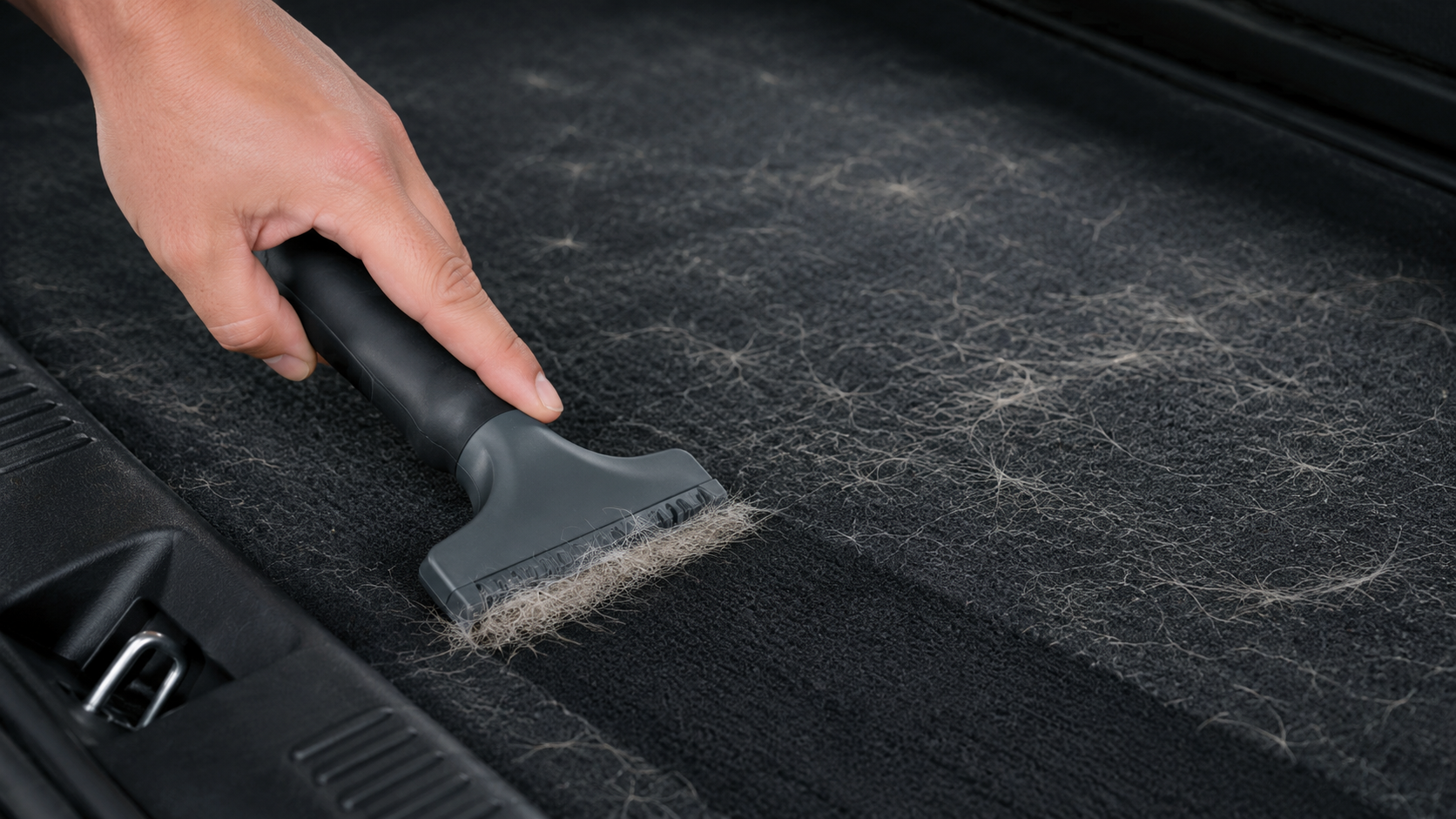
If you travel with a dog or cat, you already know the problem. Pet hair embeds itself into fabric seats and carpet in a way that defies normal vacuuming. The fibres weave into the upholstery and hold on tenaciously no matter how many passes the vacuum makes.
The good news is that with the right tools and approach, pet hair removal is very achievable. Here’s what actually works, in order of effectiveness.
Why Pet Hair Is So Hard to Remove
Pet hair isn’t just sitting on top of your upholstery. It gets physically tangled into the weave of fabric seats and carpet fibres. Static electricity makes it cling to surfaces, and short, fine hairs from breeds like Labradors and German Shepherds are particularly adept at working their way deep into fabric.
Standard vacuum cleaners with flat attachments glide over the surface without generating enough friction or suction to pull embedded hair out of the weave. That’s why the right tool for pet hair removal is usually not a vacuum, at least not to start with.
Step 1: Use a Rubber Tool to Loosen the Hair First
Before reaching for the vacuum, use a rubber tool to agitate and loosen the hair from the fabric. Options include:
Rubber pet hair removal brush: specifically designed for this purpose, with textured rubber bristles that generate static and pull hair into clumps. These are inexpensive and highly effective on fabric seats.
Rubber squeegee: the same principle. Drag firmly across the fabric in one direction and watch the hair collect into rolls.
Rubber glove: dampen slightly and drag your palm across the fabric. The rubber grips the hair and rolls it into clumps that can be picked up by hand or vacuumed.
Velcro hair curler: the hook side of Velcro is surprisingly effective at grabbing pet hair when dragged across fabric.
Work in one direction, collecting hair into clumps as you go. On carpet, short firm strokes work better than long sweeping ones.
Step 2: Vacuum Thoroughly
Once the hair has been agitated and clumped, vacuum the entire surface. Now the vacuum can actually pick it up rather than pushing it around.
Use a vacuum with strong suction and a motorised brush attachment if available. The rotating brush continues to agitate fibres while the suction removes them. Work methodically across every surface: seats, including the gap between the cushion and backrest, carpet, floor mats, and the boot.
For gaps and crevices where hair collects, a narrow crevice tool or a stiff brush pushed into the gap before vacuuming helps dislodge it.
Step 3: Tape or Lint Roller for Final Pass
For a finishing pass, particularly on fabric seats after the bulk of hair has been removed, a wide lint roller or packing tape wrapped around your hand picks up fine remaining hairs that the vacuum missed. This is especially useful for the top surfaces of seats where fine, light coloured hairs remain visible.
What About Carpet Specifically?
Carpet tends to hold hair even more stubbornly than fabric seats because the pile is deeper. A stiff bristled brush used before vacuuming is particularly helpful on carpet. Scrub in short strokes against the pile direction to bring hair to the surface, then vacuum thoroughly.
For floor mats, remove them from the car first. They’re easier to work on flat, and you can beat them against a hard surface to dislodge embedded hair before brushing and vacuuming.
Preventing the Buildup
Seat covers: purpose made pet seat covers or hammock style covers that drape over the rear seats are the most effective prevention. They’re washable and keep hair contained to a removable surface.
Boot barriers: a mesh or fabric barrier keeps pets in the boot rather than on the seats, concentrating the hair to one area with a boot liner underneath.
Regular grooming: a well brushed dog sheds less. More hair removed at home means less deposited in the car.
Regular vacuuming: light weekly vacuuming prevents the deep embedding that makes heavy pet hair removal so difficult. Little and often is far easier than periodic intensive sessions.
When to Call a Professional
For a car that’s been heavily used by pets for an extended period without regular cleaning, particularly where hair is deeply embedded across multiple surfaces and pet odour has set in, a professional interior detail is the most efficient solution. Detailers have commercial grade extraction equipment, dedicated pet hair tools, and the products to address odour at the same time.
If the pet hair situation in your car has got away from you, CarConex connects you with local detailers who offer interior deep cleans. Post your request through the app to find the right person.