
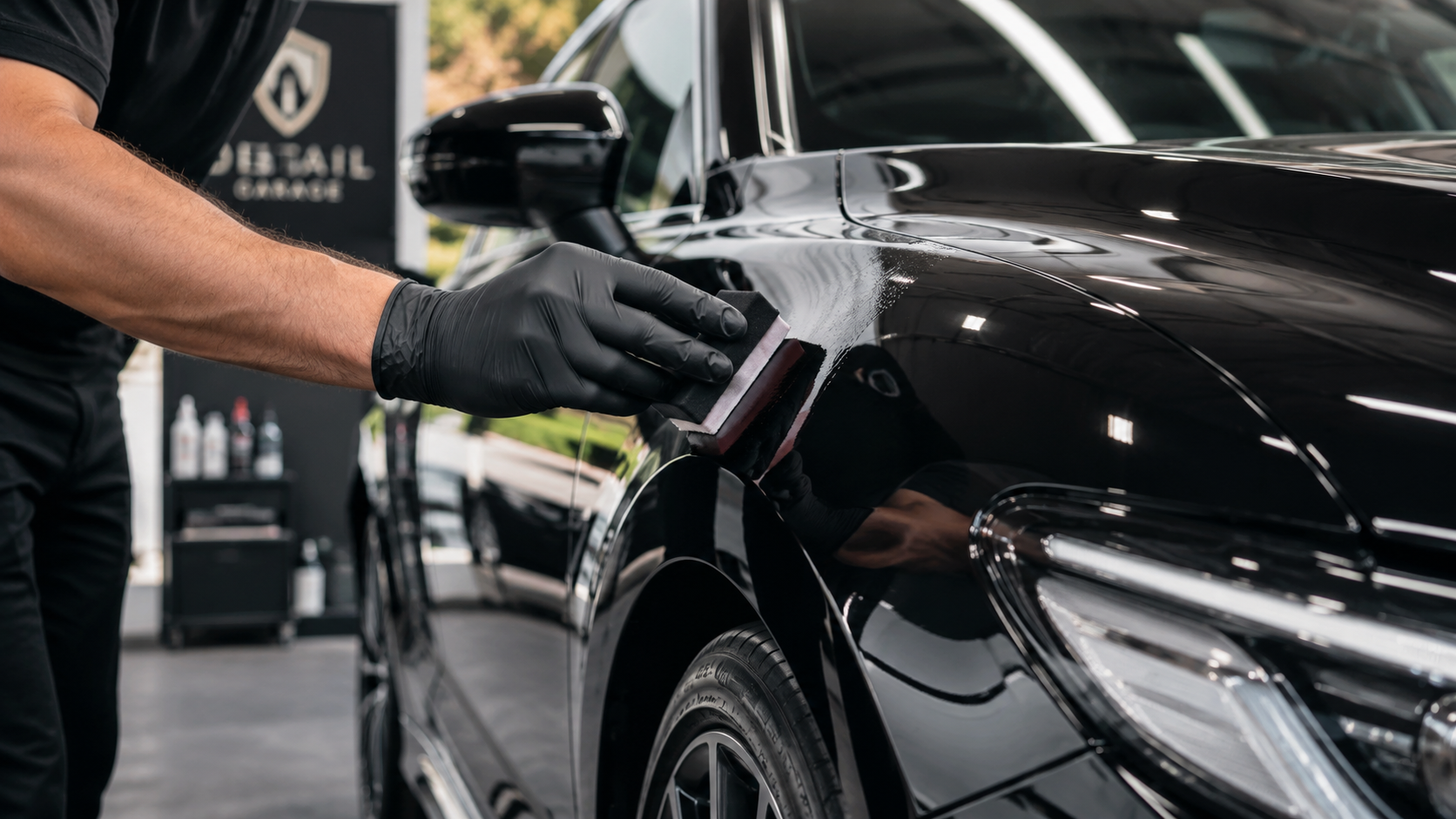
If you’ve started researching paint protection, you’ve almost certainly come across these two options: paint protection film, also known as PPF, and ceramic coating. Both protect your car’s paint, but they work differently, cost differently, and suit different needs.
Here’s a plain English breakdown of what each one does, how they compare, and how to decide which is right for your situation.
What Is Paint Protection Film?
Paint protection film, also known as PPF, clear bra, or by brand names like XPEL and SunTek, is a thick, transparent thermoplastic urethane film that’s applied directly to the paint surface. Think of it as a sacrificial layer: it takes the physical damage so your paint doesn’t have to.
PPF is particularly effective against:
Stone chips and road debris
Scratches from keys, car park incidents, and brushing past vegetation
Bug splatter and bird dropping etching
Swirl marks from washing
Minor abrasions
Most modern PPF products also have a self healing property. Light surface scratches in the film disappear with heat from the sun or warm water. The film itself can be removed and replaced if it becomes damaged.
What Is Ceramic Coating?
Ceramic coating is a liquid polymer that chemically bonds to your car’s paint surface, curing into a hard, transparent layer. It doesn’t provide the same physical protection as PPF, but it delivers benefits that film can’t:
Extreme hydrophobicity: water beads and rolls off the surface, taking dirt and contaminants with it
UV resistance: protects the paint from oxidation and fading
Chemical resistance: bird droppings, tree sap, and industrial fallout are easier to remove and cause less damage
Gloss enhancement: quality ceramic coatings deepen the appearance of the paint significantly
Easier maintenance: the surface stays cleaner for longer and washes more easily
A professional grade ceramic coating can last anywhere from two to five years depending on the product and maintenance.
Key Differences at a Glance
Physical impact protection: PPF wins. It absorbs stone chips and scratches. Ceramic coating does not.
Hydrophobics and self cleaning: ceramic coating wins. The surface repels water and contamination far more effectively.
UV protection: both provide UV resistance, though ceramic coating edges ahead for long term paint preservation.
Gloss and visual enhancement: ceramic coating typically delivers a deeper, wetter look.
Longevity: PPF can last 10 plus years with quality products. Ceramic coating typically lasts 2 to 5 years.
Cost: PPF is significantly more expensive, particularly for full vehicle coverage.
Repairability: PPF can be removed and replaced panel by panel. Ceramic coating is chemically bonded and requires correction to remove.
Typical Cost Ranges in Australia
Costs vary by installer, product quality, and vehicle size, but as a general guide:
Ceramic coating, professional: $800 to $3,000 plus depending on paint correction required and coating tier
PPF, partial, including bonnet, mirrors, and bumper: $1,500 to $3,000
PPF, full vehicle: $5,000 to $10,000 plus
These are investments, not expenses. Both protect and preserve the value of your vehicle over time.
Can You Have Both?
Yes, and many enthusiasts do. A common combination is PPF on the high impact areas, such as the front bumper, bonnet, mirrors, and leading edges of doors, and ceramic coating over the top of the PPF and across the rest of the vehicle.
This gives you the best of both worlds: physical impact protection where you need it most, and hydrophobic surface protection everywhere.
Which Is Right for You?
Choose PPF if:
You drive frequently on highways or country roads with stone chip risk
You have a new or high value vehicle you want to protect from physical damage
You’re particularly concerned about maintaining resale value
You want a long term solution and are prepared for the upfront cost
Choose ceramic coating if:
Your primary concern is making the car easier to maintain and keep clean
You want UV protection and gloss enhancement
You’re on a tighter budget but still want meaningful paint protection
Your car is garaged or has lower physical damage risk
The Bottom Line
PPF and ceramic coating aren’t competitors. They’re complementary. PPF protects against physical damage. Ceramic coating protects against chemical and UV damage while making the car easier to maintain.
The right choice depends on your budget, how you use your car, and what risks you’re most exposed to.
Both require professional installation to perform properly. The quality of the installer matters as much as the product.
If you’re looking for a professional to advise on the right option for your car and install it properly, CarConex connects you with trusted local detailers and paint protection specialists. Post your request through the app to compare options and pricing in your area.