
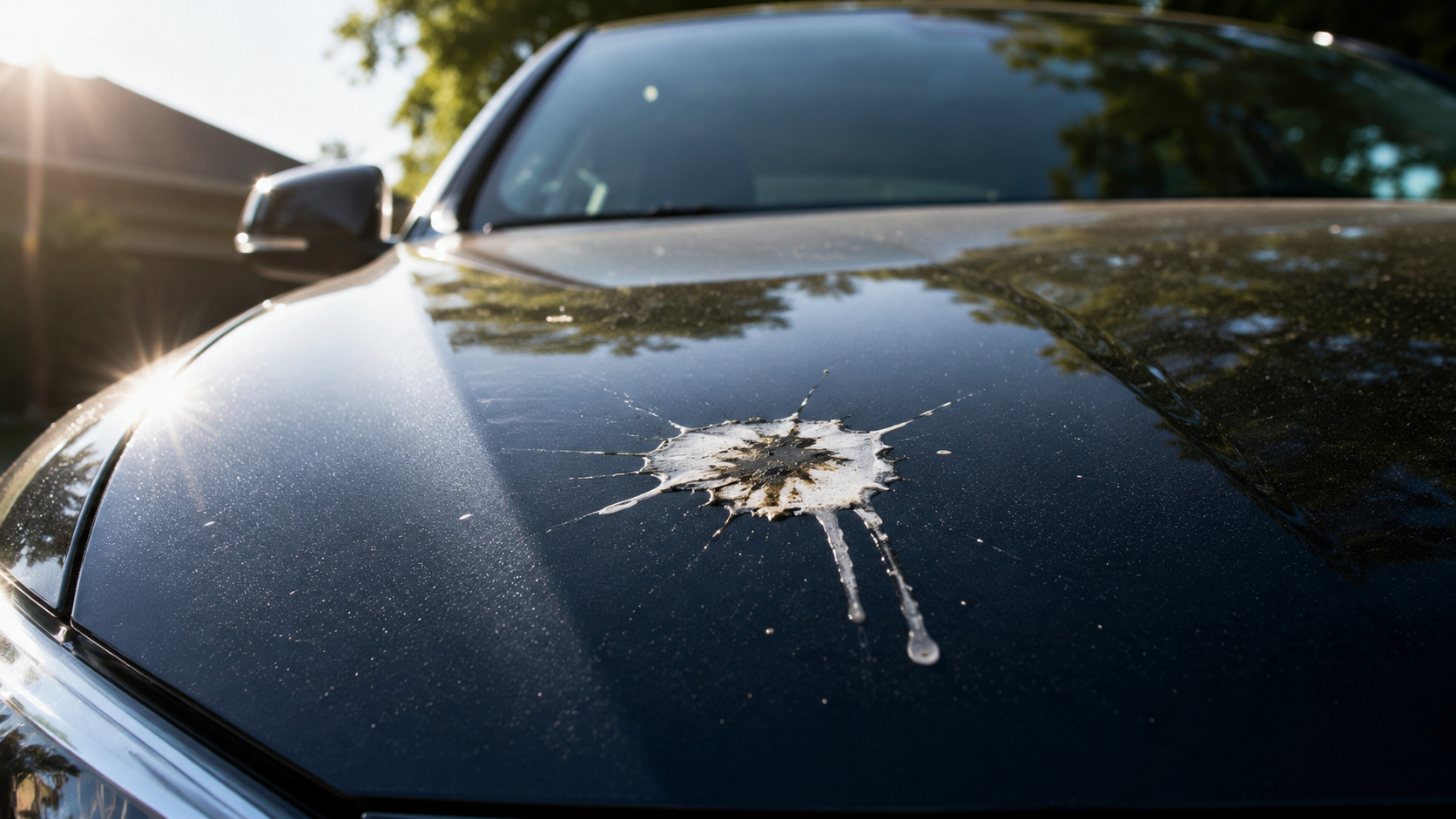
Most people know bird droppings on a car are annoying.
What fewer people realise is how much damage they can cause and how quickly that damage can happen.
If you have ever left bird droppings sitting on the bonnet until your next wash, this is a good reason to stop doing that.
Why Bird Droppings Are So Damaging to Car Paint
Bird droppings are highly acidic.
Their pH can vary, but they are acidic enough to attack your car’s clear coat, which is the transparent protective layer sitting over the paint. If bird droppings are left on the surface for too long, the acid can begin to etch into that clear coat and, in more severe cases, affect the paint underneath.
The damage is not only chemical.
As the droppings dry out, they harden and shrink. When the surface of your car heats up in the sun, the paint expands slightly, but the hardened dropping does not move with it. This can create a visible imprint or etched mark in the paint surface.
In hot Australian conditions, this can happen much faster than many car owners expect.
How Long Until Damage Happens?
There is no exact rule because it depends on temperature, sun exposure, the condition of the paint, and whether the surface is protected.
As a rough guide:
- Under 1 hour, usually low risk, but it is still best to remove it as soon as possible.
- 1 to 4 hours in warm conditions, the acid may already be starting to affect the clear coat.
- 4 to 12 hours, visible etching becomes more likely, especially in direct sunlight.
- 24 hours or more, significant damage is much more likely, including marks that may need polishing or correction.
If your car has fresh wax, sealant, or ceramic coating, you may have a bit more protection.
If the paint is older, unprotected, or already weathered, it is usually more vulnerable.
Why Heat Makes It Worse
Heat speeds everything up.
On a warm day, especially in direct sun, the bonnet, roof, and boot can get extremely hot. This increases the reaction between the acidic dropping and the paint surface.
That is why a dropping left on the car in the morning can sometimes leave a mark by the afternoon.
In Australia, where high UV and hot weather are common, bird droppings are more than just a nuisance. They are a real paint risk.
How to Remove Bird Droppings Safely
The most important thing is this:
Do not wipe bird droppings off dry.
If you rub them while they are still dry and hardened, you can drag grit and debris across the surface and create scratches.
The safer method is to soften them first.
Safe removal method
- Spray the area with a bird dropping remover, quick detailer, or clean water.
- Alternatively, soak a clean microfibre cloth in warm water.
- Lay the wet cloth over the dropping for 30 to 60 seconds to soften it.
- Gently blot or lift the softened droppings away.
- Use a clean section of microfibre to lightly wipe the area if needed.
- Rinse or wipe the area clean afterwards.
The goal is to lift the contamination away gently, not scrub it off.
What If the Paint Is Already Marked?
If you can still see a stain, dull patch, etched mark, or slight imprint after removing the dropping, the clear coat may already be affected.
Light damage can often be improved through polishing or paint correction.
This may involve:
- hand polishing for minor marks
- machine polishing for more visible etching
- professional paint correction if the damage is more advanced
If the damage is deep enough to go through the clear coat, a detailer may not be able to fully correct it without more significant repair work.
That is why acting quickly matters so much.
A light correction is far easier and cheaper than dealing with permanent paint damage later.
Can You Prevent Bird Dropping Damage?
You cannot stop birds entirely, but you can reduce the risk.
Helpful prevention steps include:
- Avoid parking under trees, power lines, and light poles where birds commonly perch.
- Keep your paint protected with wax, sealant, or ceramic coating.
- Use a car cover if the vehicle sits outside for long periods.
- Keep a small quick detailer spray and a couple of clean microfibre cloths in the car so you can deal with droppings quickly.
Paint protection products do not make your car immune, but they can slow acid penetration and buy you more time.
The Bottom Line
Bird droppings are one of the most underestimated threats to car paint.
They are acidic, they can dry and etch quickly, and heat makes the problem worse. In Australian conditions, leaving them on the paint even for part of a day can be enough to cause visible damage.
The best approach is simple:
Act quickly, soften the dropping first, remove it gently, and keep your paint protected.
If the damage is already done, a professional detailer can assess the paint and recommend the right solution, whether that is a light polish, paint correction, or a protective coating.
CarConex helps connect car owners with trusted local detailers who can assess paint damage and recommend the right treatment.
Post your request through the app, compare local responses, and choose a professional with confidence.