
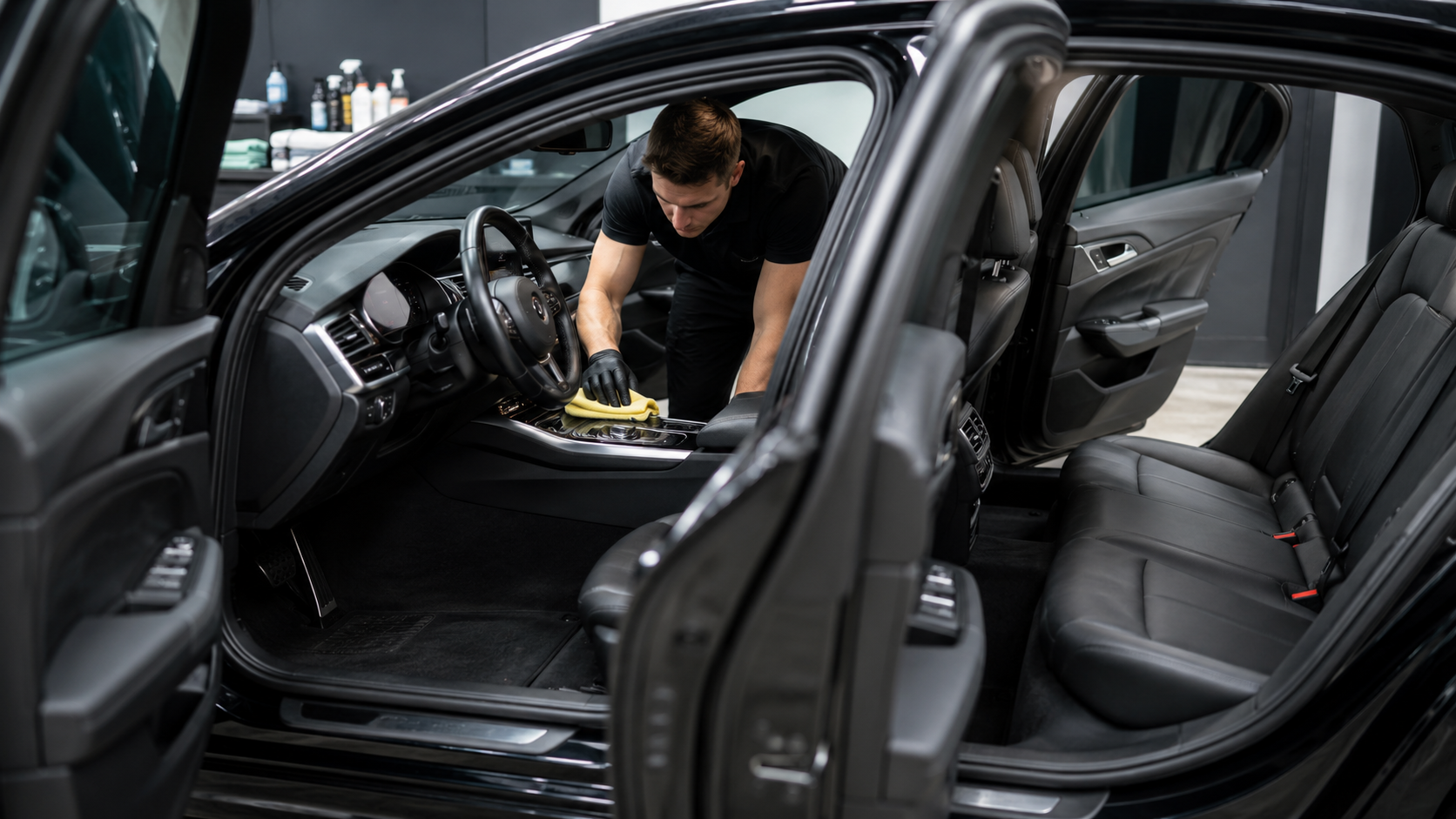
A bad smell in a car is one of those things that’s easy to ignore when you’re used to it, until someone else gets in and notices immediately. Whether it’s old food, wet dog, cigarette smoke, mildew, or just years of accumulated odour, the good news is that most car smells can be eliminated, not just masked.
Here’s how to actually get rid of bad car odours, starting with finding the source.
Step One: Find the Source
Air fresheners and sprays don’t fix odours. They cover them up temporarily. The only way to permanently remove a smell is to eliminate the source. Common culprits include:
Food and drink spills soaked into carpet or upholstery: even if the surface looks clean, liquid that’s penetrated deep into the foam can continue to smell for months
Pet hair and dander: these embed into fabric and can be surprisingly persistent
Cigarette smoke: one of the hardest odours to remove because the particles penetrate every surface including the headliner, air vents, and foam
Mildew and mould: caused by moisture getting into the interior, often through a leak, wet clothes, or inadequate drying after a spill. Has a distinctive musty smell
Dirty air conditioning system: bacteria and mould can build up in the evaporator and blow odour through the vents when the AC runs
Rubbish and food packaging left in the car
How to Remove Common Car Odours
General Odours and Staleness
Start with a thorough vacuum of every surface, seats, carpets, floor mats, boot, and all gaps and crevices. Remove and wash the floor mats separately. Most mild odours improve significantly with a proper vacuum and fresh air.
Baking soda is effective for general odour absorption. Sprinkle liberally over carpets and fabric seats, leave for several hours or overnight, then vacuum thoroughly.
Food and Drink Spills
For spills that have soaked in, surface cleaning isn’t enough. The affected area needs to be extracted, either with a wet dry vacuum, a carpet extractor, or a professional grade upholstery cleaner. The goal is to pull the contamination out of the foam beneath the fabric, not just clean the surface.
An enzyme based cleaner is particularly effective for organic odours, food, drink, and biological sources. Enzymes break down the odour causing compounds at a molecular level rather than masking them.
Pet Odour
Pet odour typically requires an enzyme based cleaner applied generously to affected areas, allowed to dwell, then extracted. For severe cases this may need to be repeated. A dedicated pet odour eliminator product will be more effective than a general interior cleaner.
Pet hair needs to be thoroughly removed first. A rubber brush or pet hair removal mitt is more effective than a standard vacuum for lifting embedded hair from fabric.
Cigarette Smoke
Smoke is the most challenging odour to fully remove because it penetrates every porous surface, fabric, foam, headliner, plastics, and the HVAC system. A thorough approach includes:
Full interior deep clean: vacuum, shampoo all fabric surfaces, wipe all hard surfaces
Headliner cleaning: smoke rises and the headliner absorbs a significant amount
HVAC treatment: a specialised bomb or spray directed into the air intake with the AC running treats the evaporator and ductwork
Ozone treatment: a professional ozone generator pumped through the car is the most effective method for severe smoke odour. Ozone oxidises odour causing particles and reaches areas that physical cleaning can’t
Mildew and Mould
Find and fix the moisture source first, a leak, broken seal, or wet item left in the car. Then treat affected areas with an anti mould spray or diluted white vinegar, allow to dwell, and extract thoroughly.
Any foam, carpet, or insulation that’s been saturated with moisture and allowed to mould may need to be replaced. At that point the contamination is too deep to clean effectively.
Air Conditioning Smell
A musty smell when the AC starts is a sign of bacteria or mould on the evaporator. An AC treatment spray, available at auto parts stores, is directed into the fresh air intake with the AC running on full fan to treat the system. For persistent cases, a professional HVAC clean is the more thorough solution.
What to Avoid
Air fresheners as a fix: they mask odours temporarily but don’t remove them. The smell returns as the freshener fades
Over wetting fabric: excess moisture that isn’t properly extracted can introduce new mildew
Leaving windows up immediately after cleaning: allow the interior to air out thoroughly after any wet cleaning
When a Professional Is the Right Call
For smoke damage, serious mildew, or odours that have persisted despite DIY attempts, a professional detailer with ozone treatment capability is the most reliable solution. Ozone treatment in particular is not a DIY option. The concentrations used are hazardous to humans and require professional handling.
If the smell in your car has beaten your DIY efforts, CarConex connects you with local detailers who offer interior deep cleans and odour elimination. Post your request through the app to find the right person for the job.